There are places in Maine where the scenery announces itself immediately. You round a corner and there it is—a mountain, an ocean overlook, some enormous view that practically demands a photograph.
Hirundo Wildlife Refuge is quieter than that.
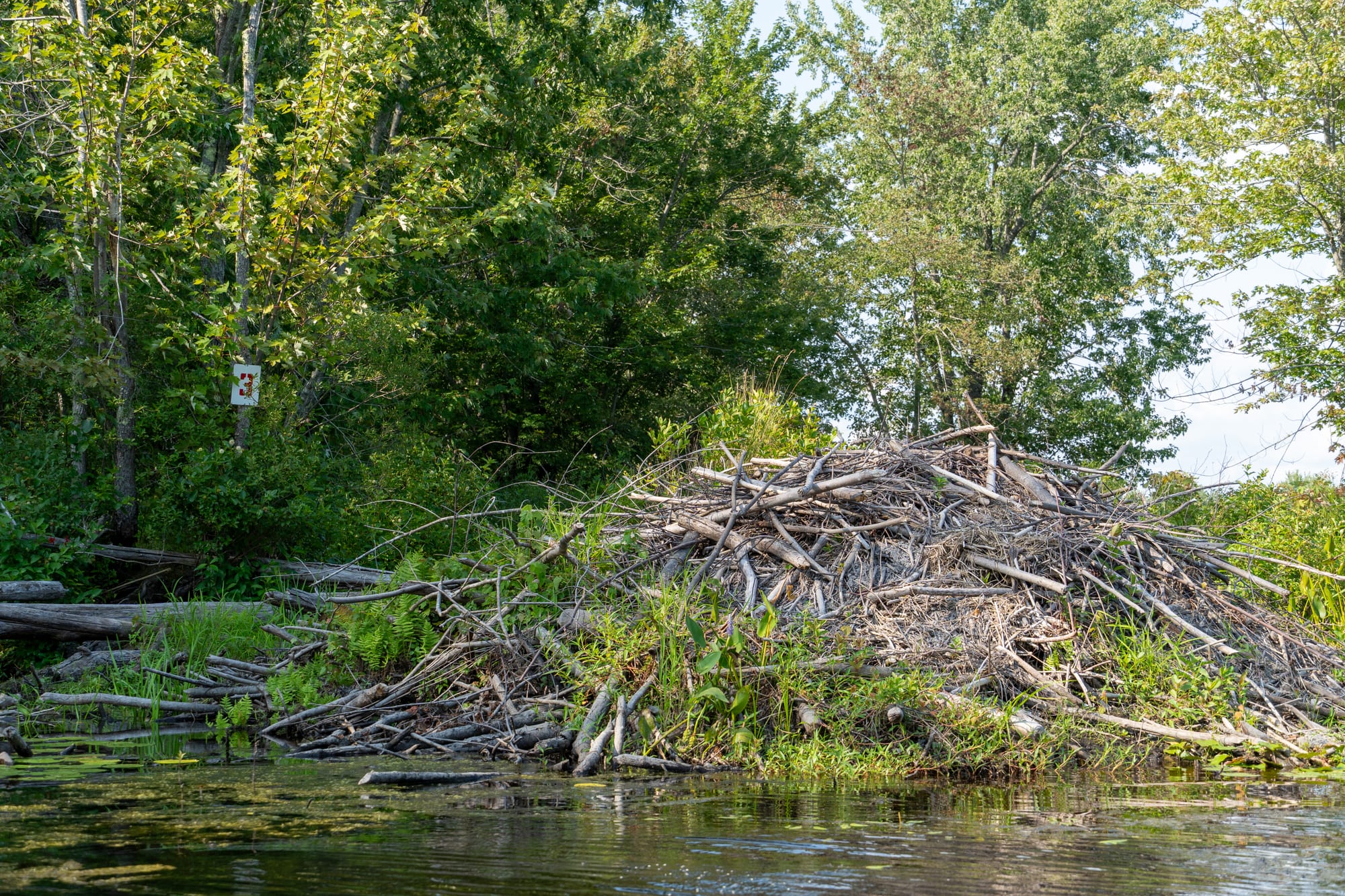
From a kayak, the landscape reveals itself a little at a time: a bend in the water, a patch of brilliant red flowers catching sunlight along the bank, the unmistakable pile of branches marking a beaver lodge.
And, if you’re lucky, a bird that decides to turn an otherwise peaceful paddle into several frantic seconds of trying to operate a camera.
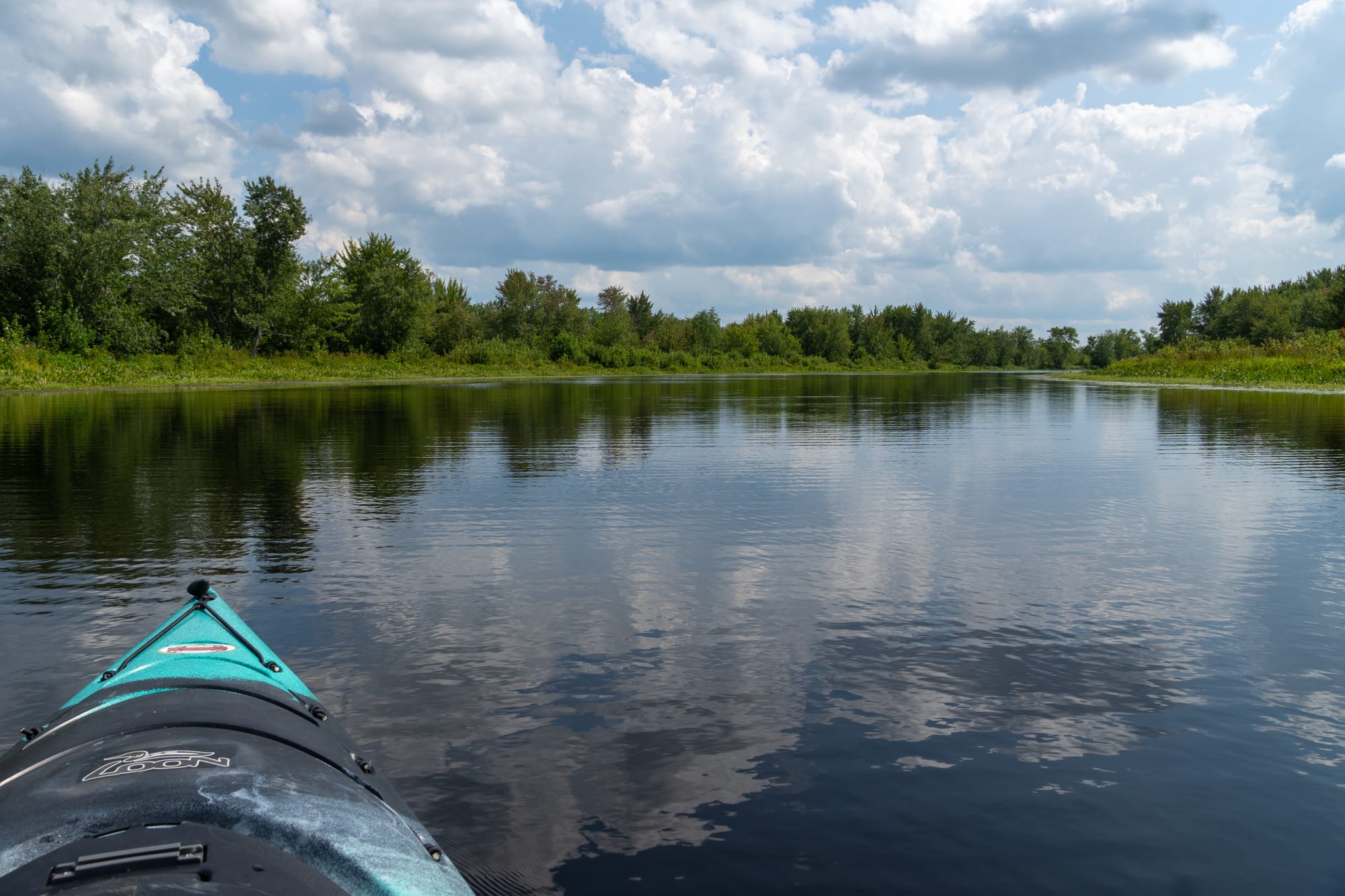
We launched the kayaks and headed onto the water without much of an agenda beyond exploring.
That’s probably the right way to experience Hirundo.
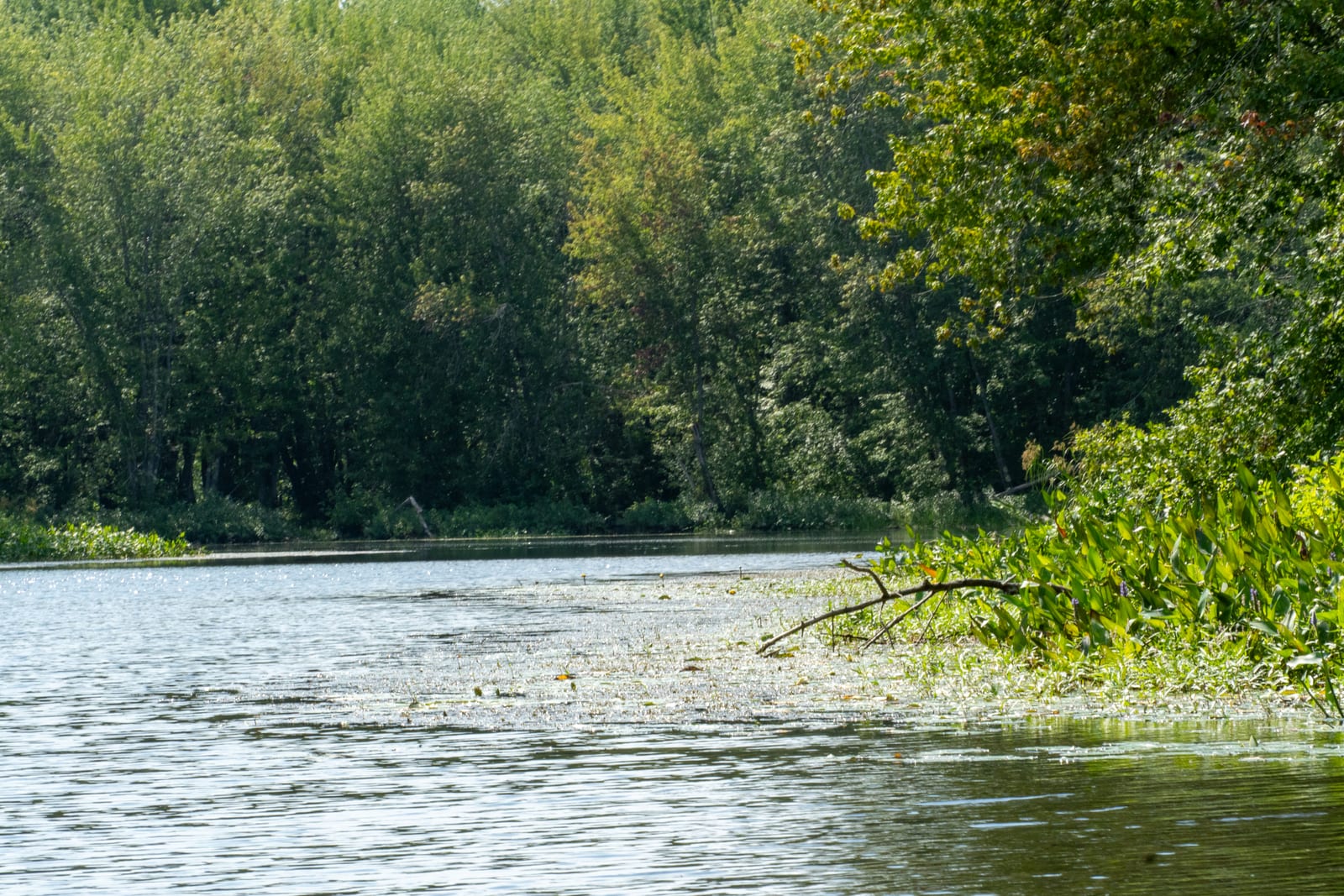
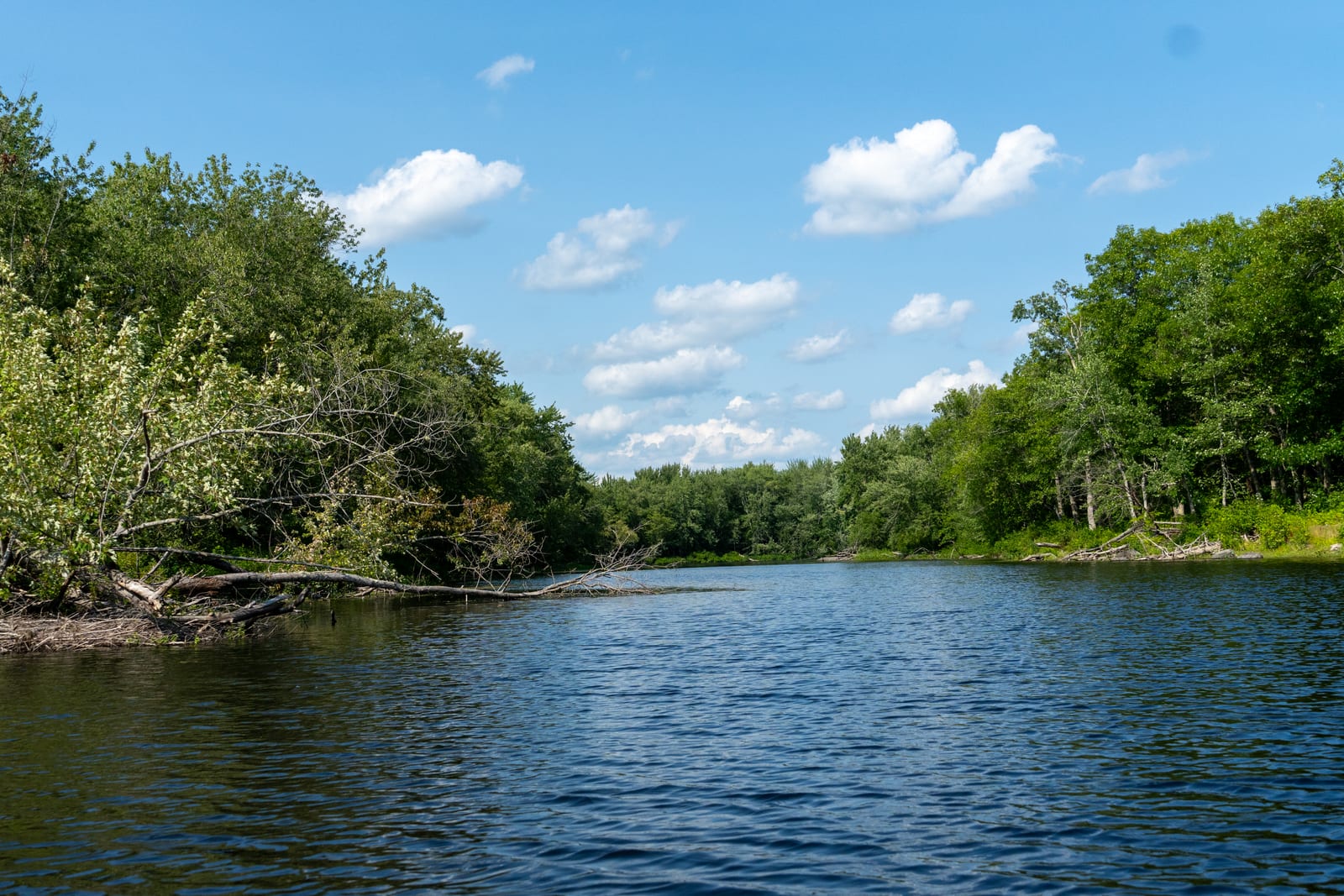
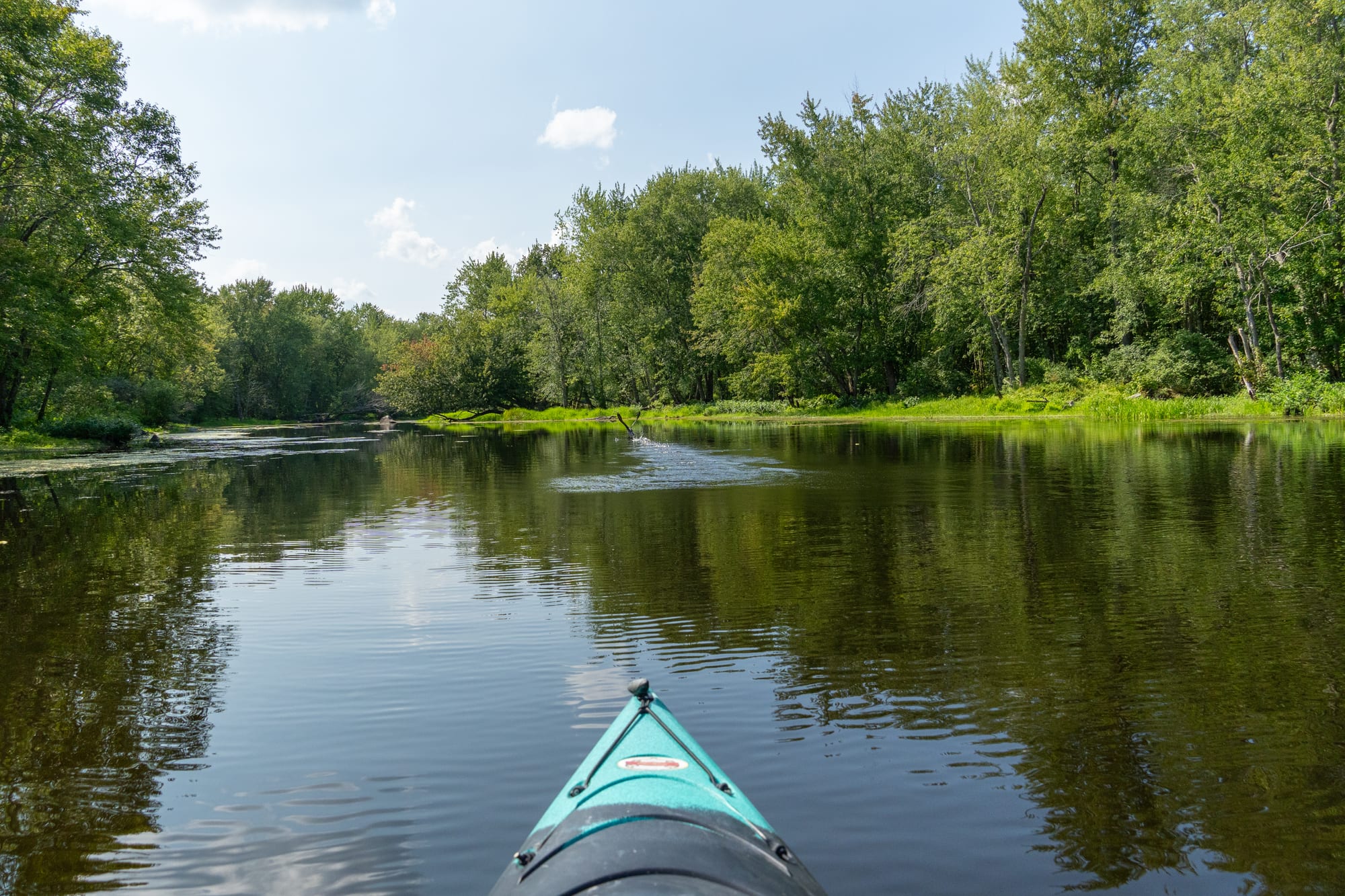
Once you’re moving at paddling speed, you start paying attention differently. The water reflects nearly everything around it. Trees lean over the banks. Vegetation crowds the shoreline. Small channels and bends keep changing what’s visible ahead.
There’s no engine idling and no particular reason to hurry.
You can stop paddling, let the kayak drift and look around.
That’s when the details start appearing.
Signs of who lives here
Some wildlife announces itself more subtly than others.
A beaver lodge along the water’s edge isn’t exactly difficult to recognize once you know what you’re looking at, but seeing one from water level feels different from spotting it from a trail.
You’re suddenly visiting the landscape from the same direction many of its residents do.
Then there were the flowers.
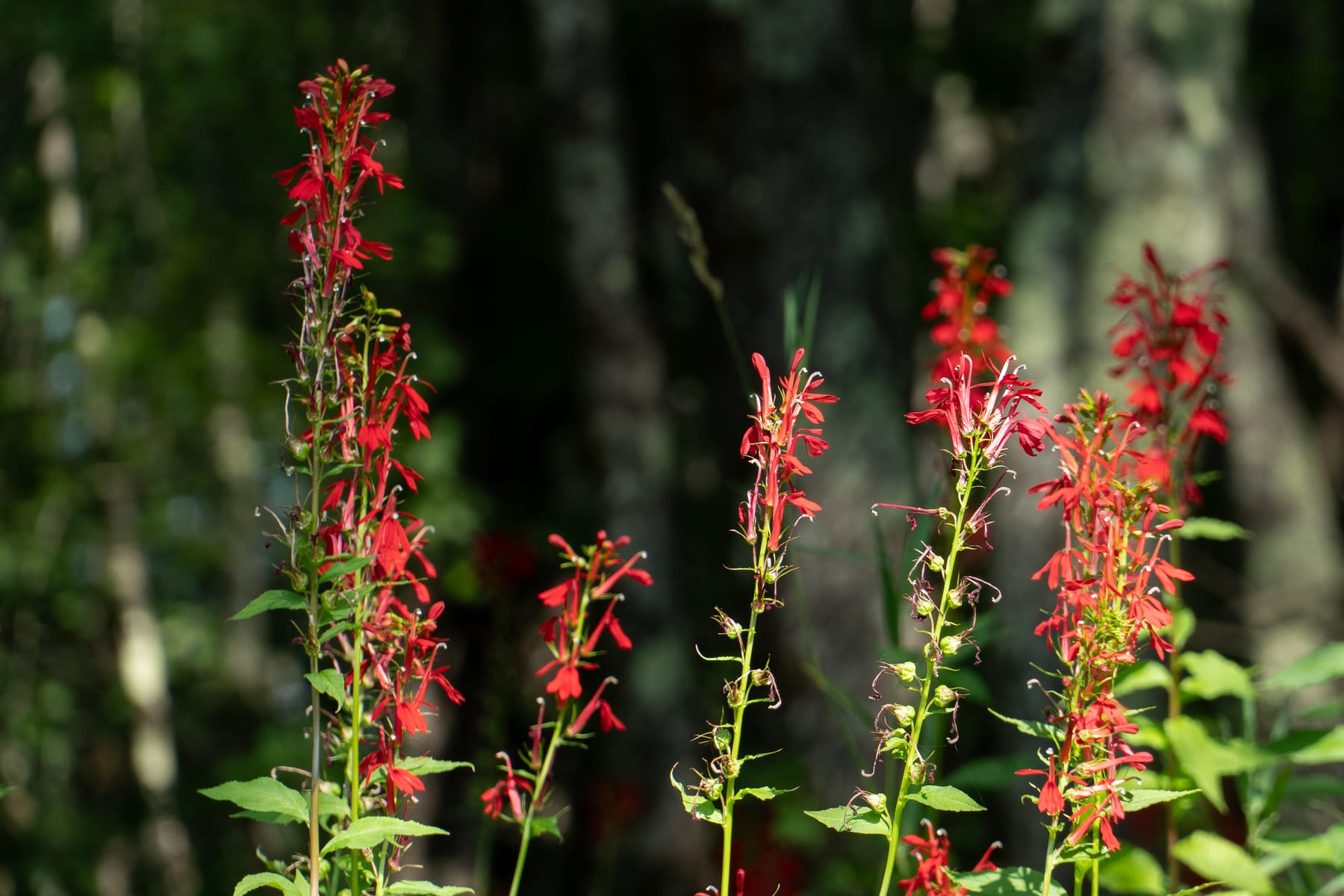
Along one shaded section of the refuge, cardinal flowers were growing at the edge of the woods. Most of the forest behind them was dark, but sunlight was finding its way through the canopy and catching individual stalks of red.
It was the kind of scene I probably would have walked past a year ago.
A camera has a funny way of changing that.
You start noticing where light falls.
And then you start noticing what’s moving through it.
And then everything happens at once
Wildlife photography from a kayak turns out to involve long stretches of peaceful observation punctuated by moments of complete chaos.
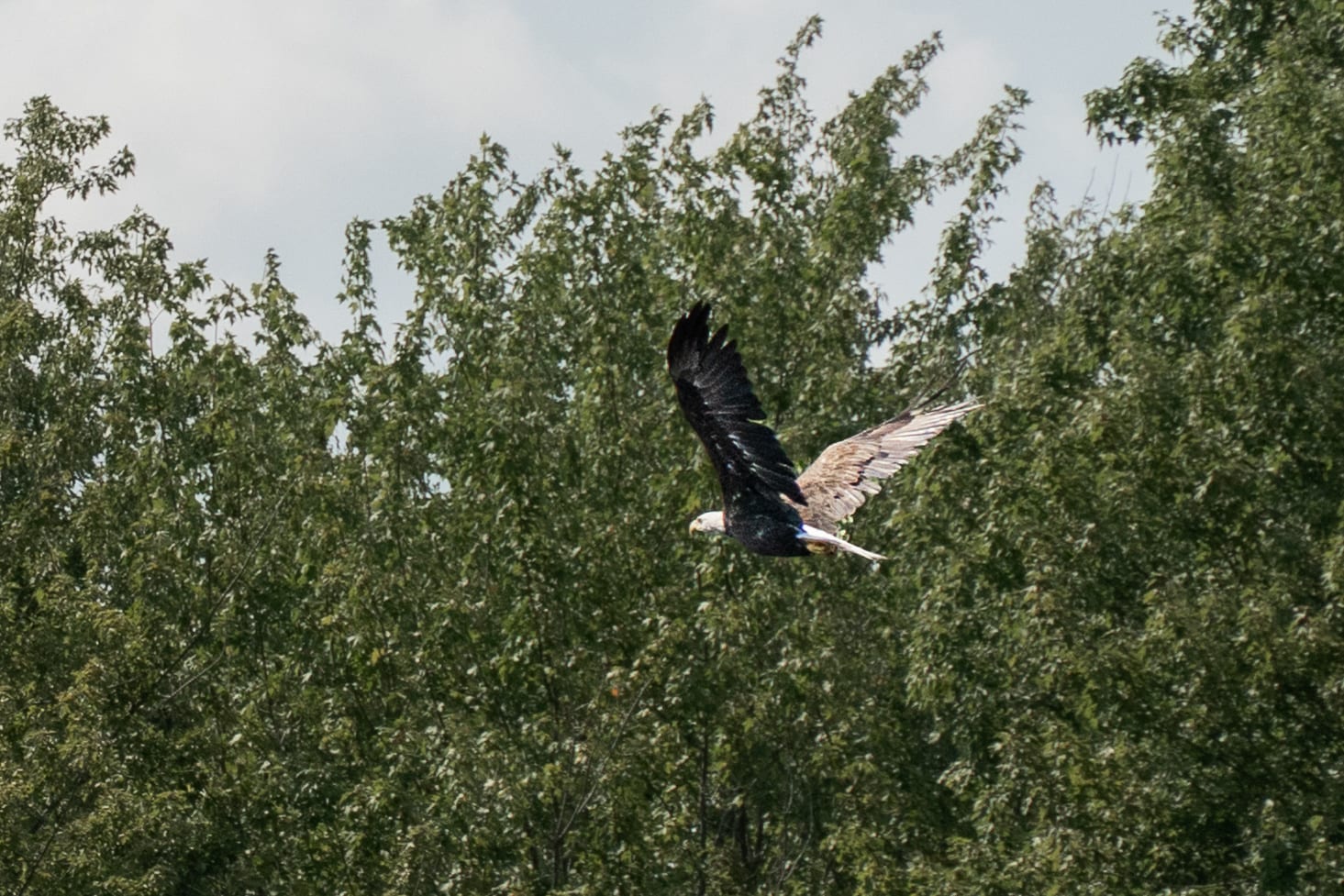
A bird appears.
You see it.
Your brain realizes what you’re seeing.
You reach for the camera.
The kayak rotates six degrees in exactly the direction you don’t want it to.
And the bird, having apparently declined to participate in your composition, leaves.
Every so often, though, everything comes together.
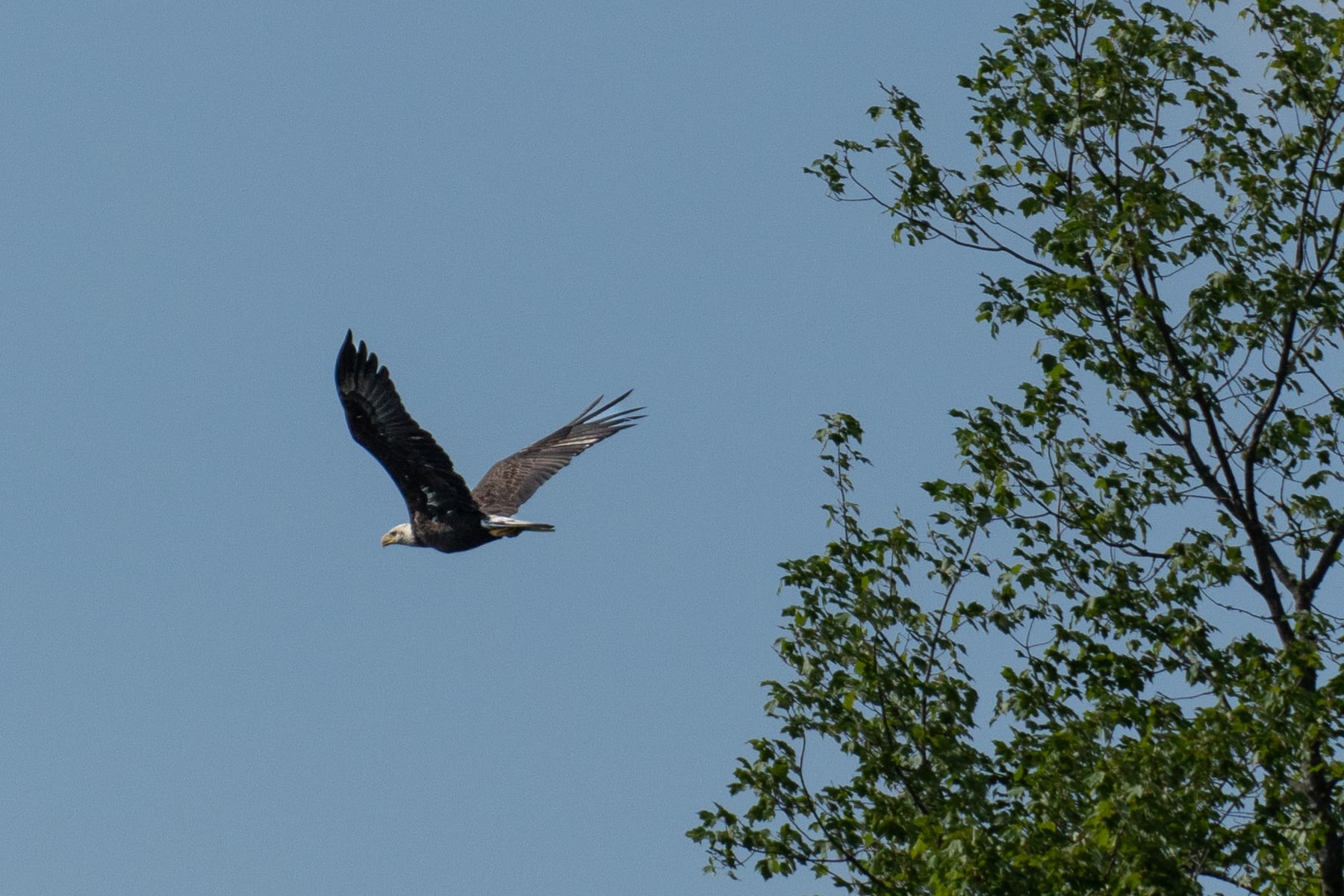
Being nearly at water level gives you a perspective that’s difficult to get from shore.
Birds aren’t always somewhere above you. Sometimes they’re moving through the landscape you’re sitting in, skimming just over the surface.
And sometimes they need a runway.
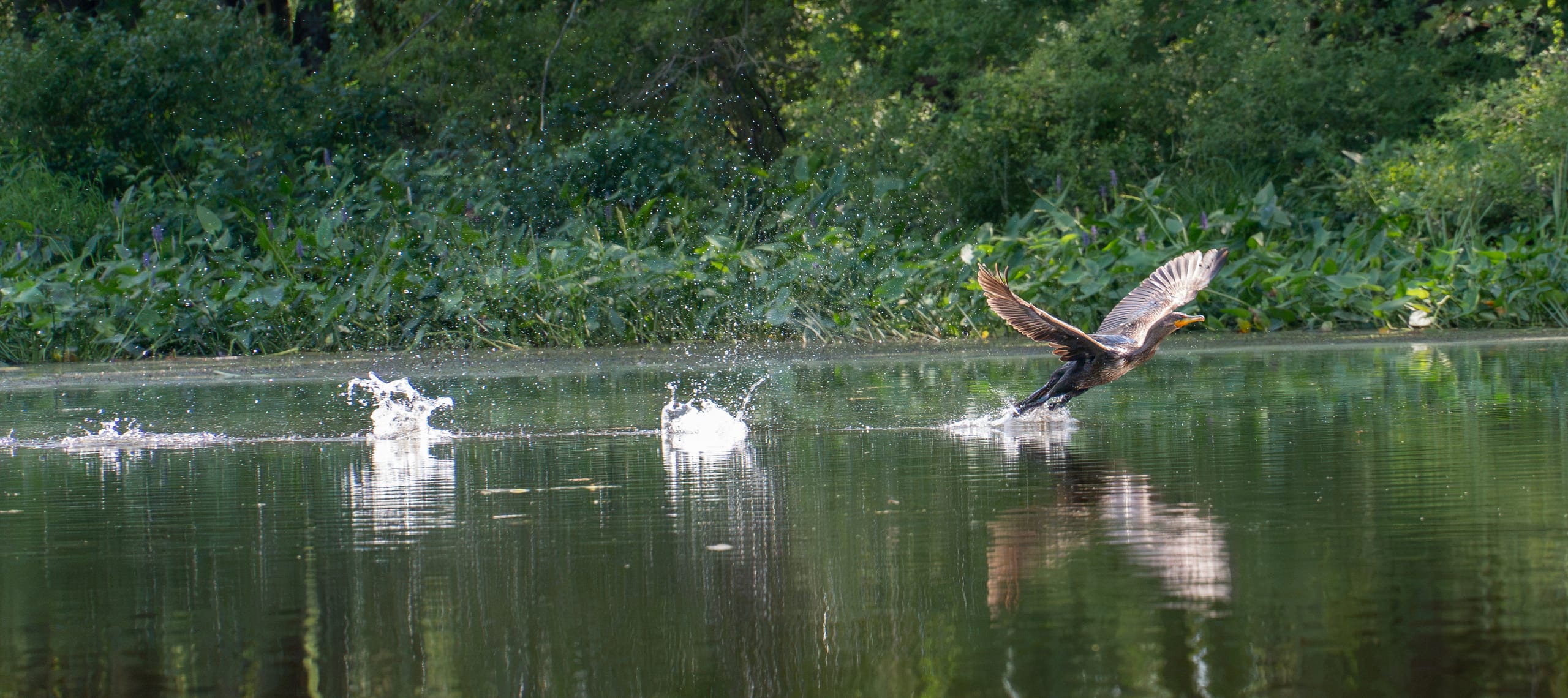
The cormorant that needed a runway
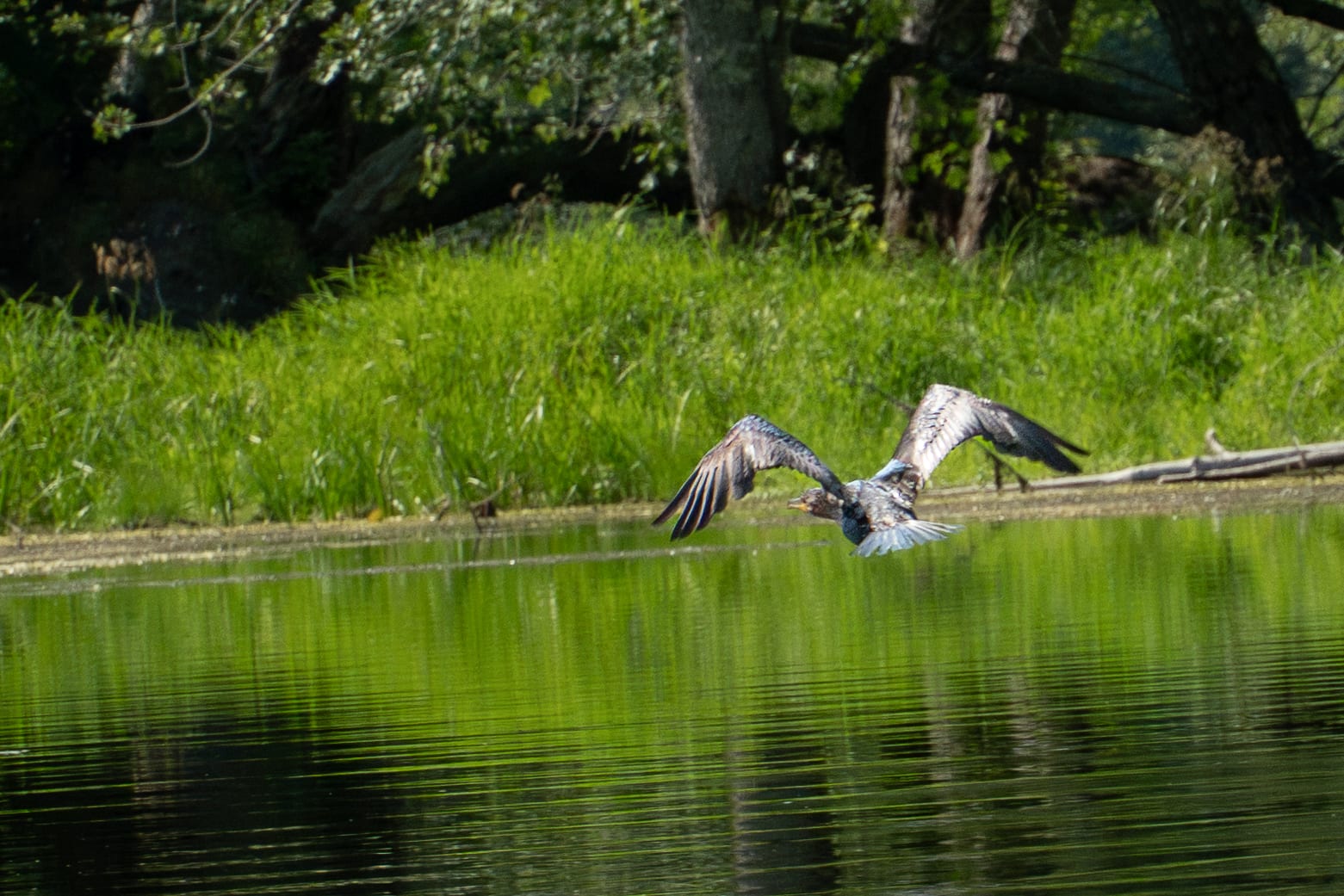
Watching a cormorant take off is wonderfully inelegant.
There’s no effortless leap into the air.
It runs.
Feet slap against the surface. Water explodes behind it. Wings stretch outward while the bird seems to negotiate with gravity over whether flight is actually going to happen.
And then, suddenly, it does.
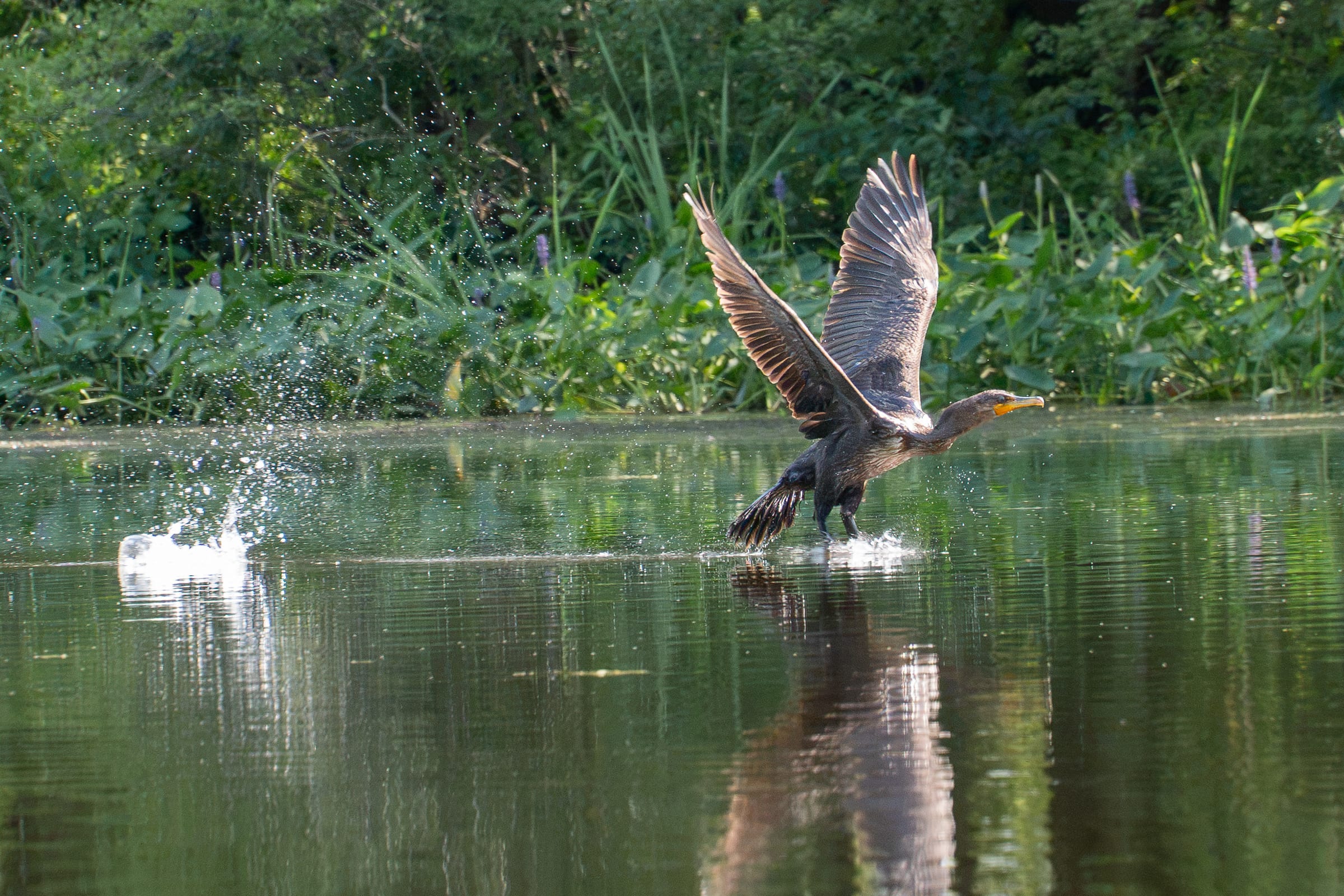
That’s the photograph I came home happiest about—not only because I managed to capture it, but because the image contains something I hadn’t fully appreciated while it was happening.
The splashes left behind trace the bird’s acceleration across the water.
It’s a fraction of a second I couldn’t really see until the camera stopped it.
A good place to go slowly
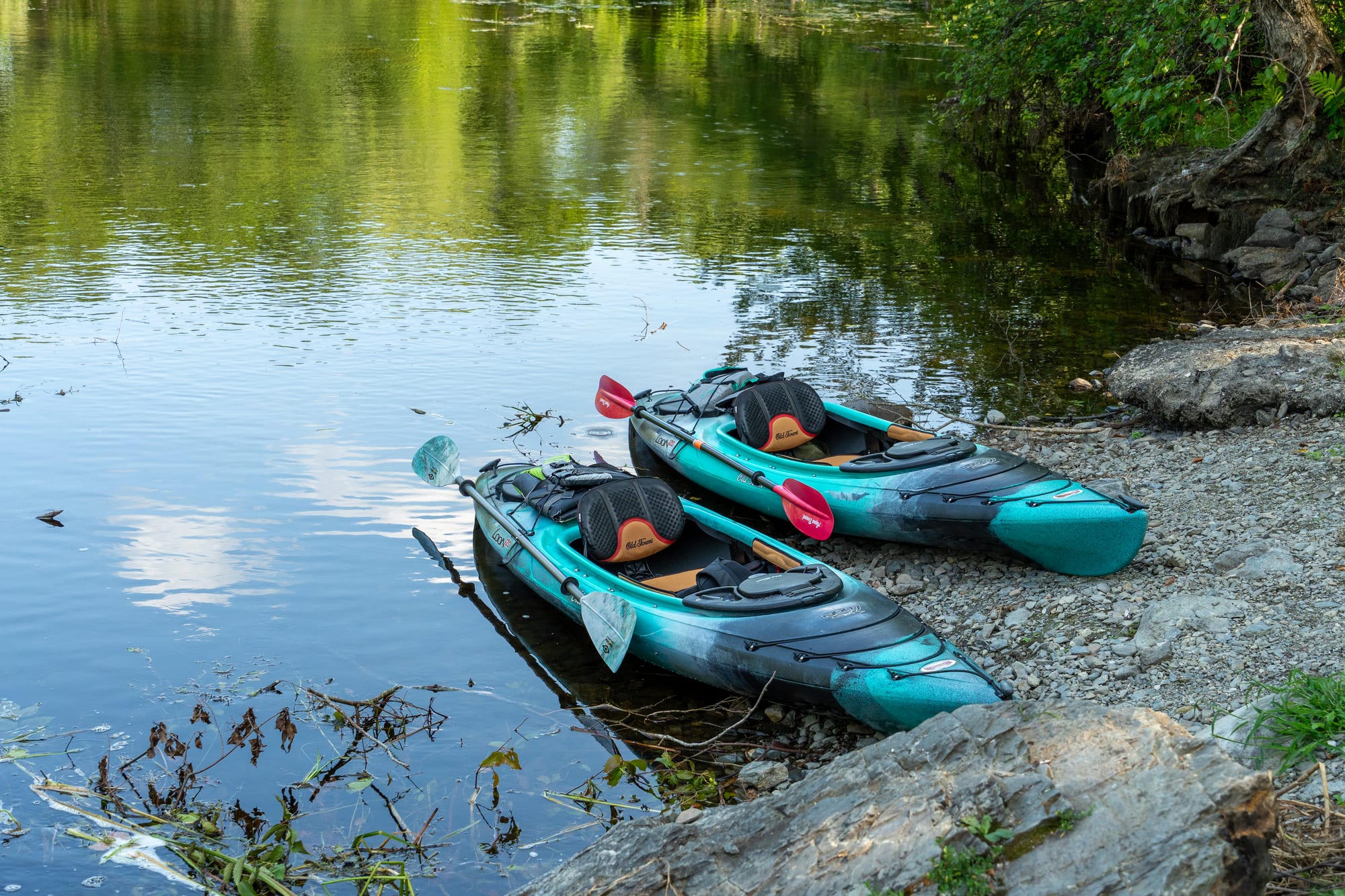
Eventually, we pulled the kayaks onto shore.
Looking back at the photographs afterward, what surprised me was how little of the day was about any one spectacular sight.
It was the accumulation of small things.
Reflections on the water.
A beaver lodge.
Red flowers illuminated against a dark forest.
Birds overhead. Birds on the water.
The sound of paddles disappearing beneath the surface and the quiet that returns when you stop using them.
Hirundo rewards that kind of attention.
You don’t necessarily go there because there’s one thing you have to see.
You go because you never quite know what you’ll notice next.